
Proper evidence handling is the foundation of every successful investigation. From the moment an item is collected at a crime scene to its presentation in court, the integrity of physical evidence plays a decisive role in whether facts withstand legal scrutiny. Plastic evidence bags are among the most commonly used tools in this process, valued for their durability, transparency, and convenience. However, improper selection or handling can compromise evidence, delay investigations, or even result in critical items being deemed inadmissible.
Below, we highlight the top mistakes professionals make when using evidence bags—and, more importantly, how to avoid them. By recognizing these pitfalls, law enforcement officers, investigators, and forensic teams can strengthen the chain of custody and preserve the evidentiary value of every item collected.
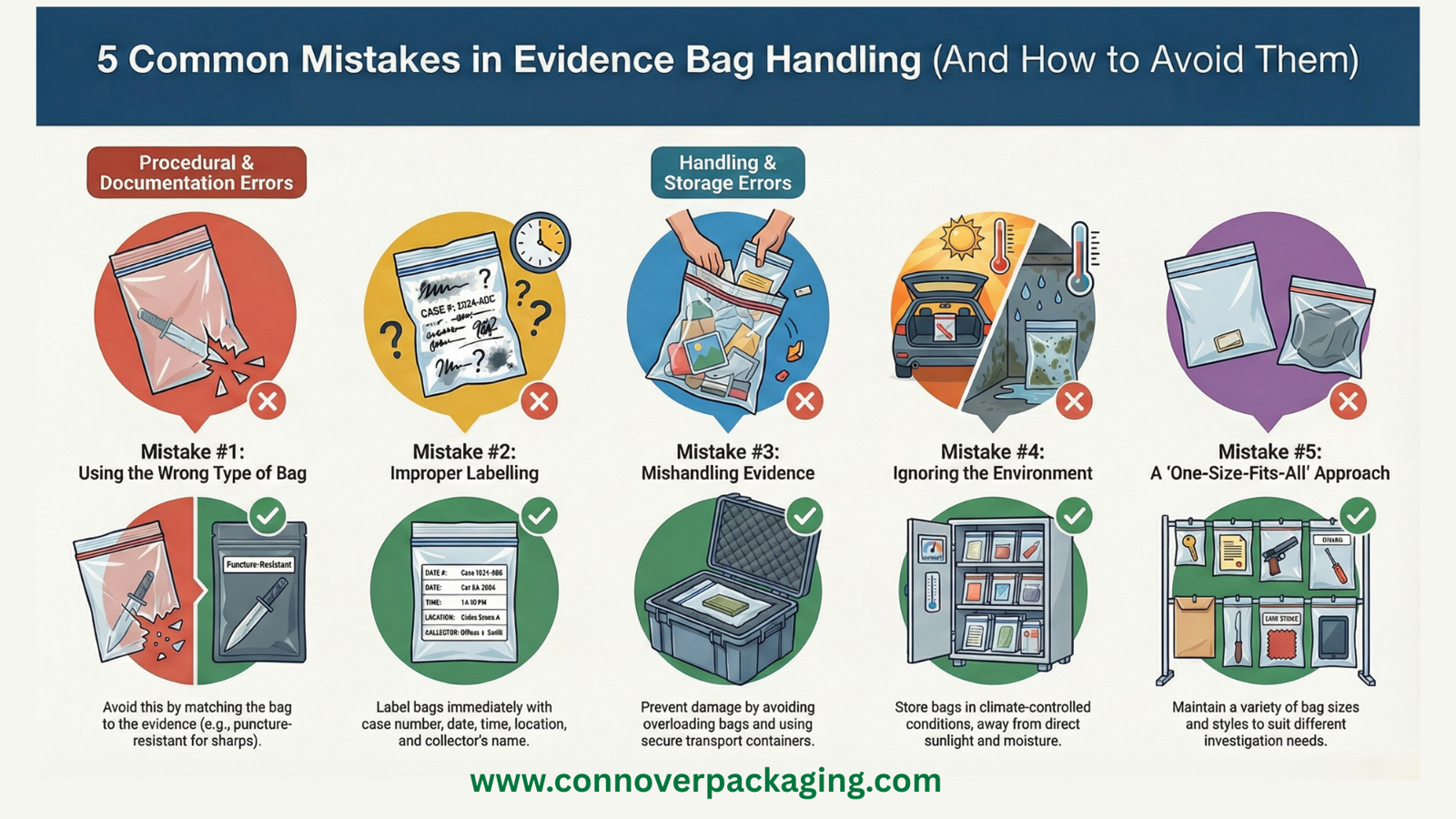
Mistake #1: Choosing the Wrong Type of Evidence Bag
Not all evidence bags are created equal. One of the most frequent errors in evidence collection is selecting a bag that is unsuitable for the material being stored. Plastic evidence bags vary in thickness, closure style, and intended use, depending on whether they are meant for biological samples, sharp objects, or trace evidence.
Why This Matters
Using the wrong type of bag can lead to contamination, moisture retention, or physical damage. For instance, placing damp biological evidence into a non-breathable plastic bag can encourage mold growth and degrade DNA, significantly reducing its forensic value.
How to Avoid It
Match the bag material and construction to the type of evidence collected
Use puncture-resistant bags for sharp or heavy items
Choose bags with secure, tamper-evident seals for long-term storage
Selecting the correct evidence bag from the start helps ensure that materials remain protected from collection through analysis. Following proper documentation and storage procedures further supports accurate, compliant evidence handling throughout the investigative process.
Mistake #2: Improper or Incomplete Labeling
Another common procedural failure is improper evidence labeling. Missing information, illegible handwriting, or labels applied incorrectly can create confusion and weaken the chain of custody.
Why This Matters
If evidence cannot be clearly identified or reliably traced back to its source, its credibility may be challenged in court. Accurate documentation is essential for establishing authenticity and maintaining legal admissibility.
How to Avoid It
Label evidence bags immediately after collection
Include all required details, such as case number, date, time, location, and collector’s name
Write clearly using permanent, non-smearing markers
Consistent and thorough labeling is a simple step that prevents serious legal and procedural complications later in the investigation.
Read more... How to Avoid the Top Mistakes When Using Plastic Evidence Bags







Write a comment ...